Thinktank
Mixed-media relief series
[...] In the Thinktank series, we encounter isolated, wall-mounted, emblematic forms. They resemble pictograms or simplified representations of vital organs. Metabolism and transport processes come to mind—associations that can also serve as visual metaphors for economic and social systems. The organ forms, “optimized” through pumps or pacemakers, appear activated by what might be called “energy flashes,” manifested as numerous floating jagged line networks. Do the organs absorb these flashes, or do they emit them? In any case, the lines are closely linked to the larger “base form,” giving it a kinetically animated quality. In Thinktank I–IV, the surrounding lines appear analogous to brain gyri, with the folds of the brain acting as a visual concentrate of highly complex networking and control. Yet the detached line forms also evoke maps, mycelial networks, technical circuits, or mysterious signs—and even bring to mind the construction of Chinese characters.
How can one “read” them? The highly technical, complex world we increasingly inhabit has, in many respects, deprived us of clarity and accustomed us—sometimes in a disquieting way—to being unable to truly read or question technical devices, automated circuits, specialized terminology, and interconnected information flows. Optimism about progress demands almost limitless trust, which often provokes discomfort. The visible surface, in fact, has little or nothing to do with the actual governing forces—or we simply fail to perceive the connection. Zaft’s works address this reality and, through the “assembly” of organ and technical forms, make clear that this unreadable, enigmatic surface could even exist within our own bodies. Pacemakers, artificial hearts, brain implants, and exoskeletons are no longer science fiction. We have entered a world of hybrid forms and beings equipped with high technology. To the viewer, the components merge. Zaft’s title, Thinktank, suggests that his work is full of ideas and cross-references. A think tank is also usually not a neutral, aimless institution but one that pursues goals carefully articulated in advance.
Thus, Zaft’s work poses a visual and intellectual challenge. Questions arise: Is it still about the sensory experience of looking with pleasure, or about an analytically distanced gaze directed more toward thought than the senses? Who am I when I look this way? What limits are crossed if one imagines oneself—or one’s own body—connected to such organ-based devices? And: what is the place of such viewing and thinking? [...]
—Quotation from Prof. Holger Bunk, “Who Could Read This…? Visual Language in the Works of Tobias Zaft,” in the catalog Thinktank (2022).

Thinktank XXI, 2024 | acrylic on MDF, 208 x 200 x 3.3 cm | ENNOVA Art Museum Collection, Langfang, China, 2024

Thinktank XXII, 2024 | acrylic on MDF, 208 x 200 x 3.3 cm
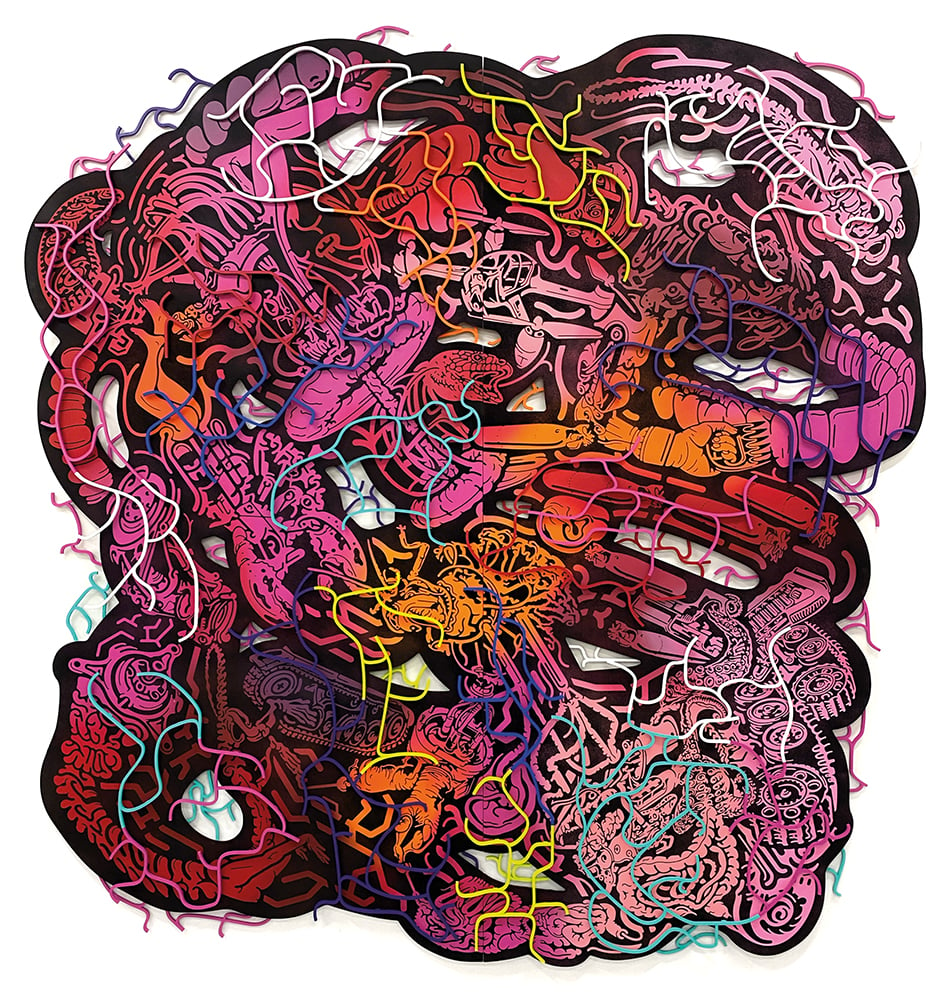
Thinktank XXI, 2022 | acrylic on MDF, 206 x 198 x 3.3 cm
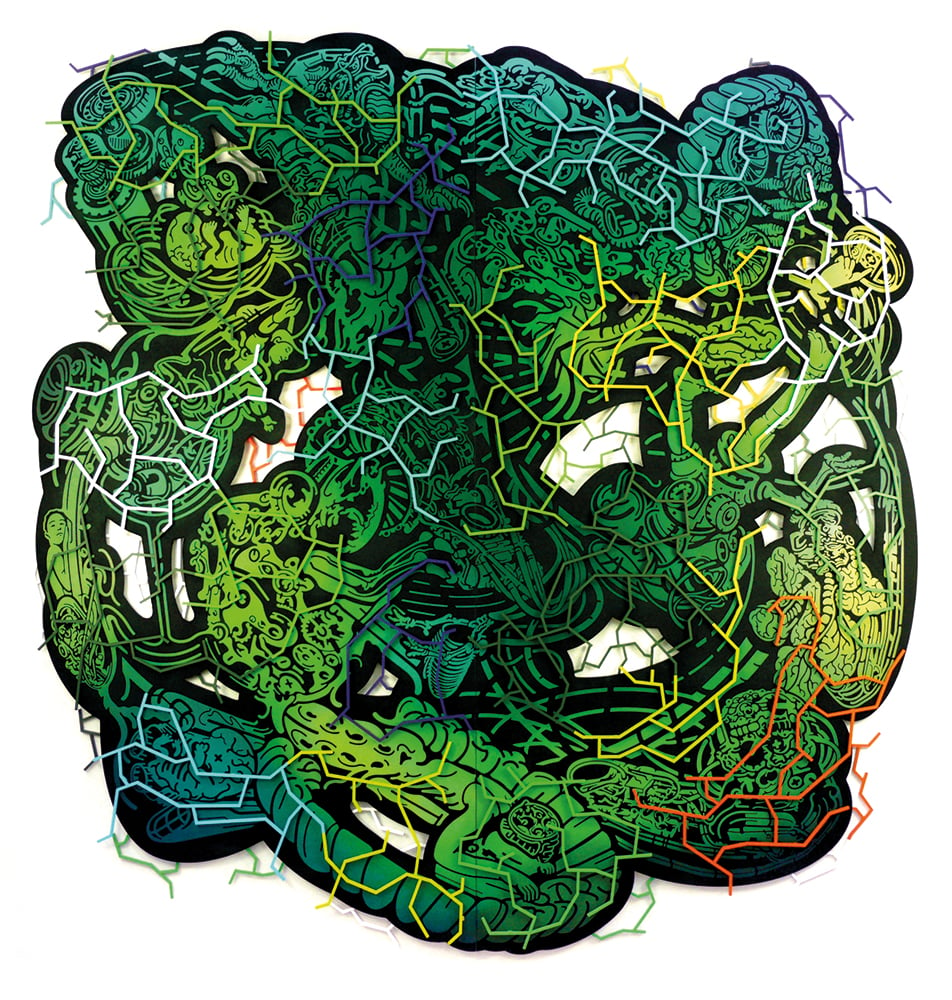
Thinktank XX, 2022 | acrylic on MDF, 206 x 198 x 3.3 cm
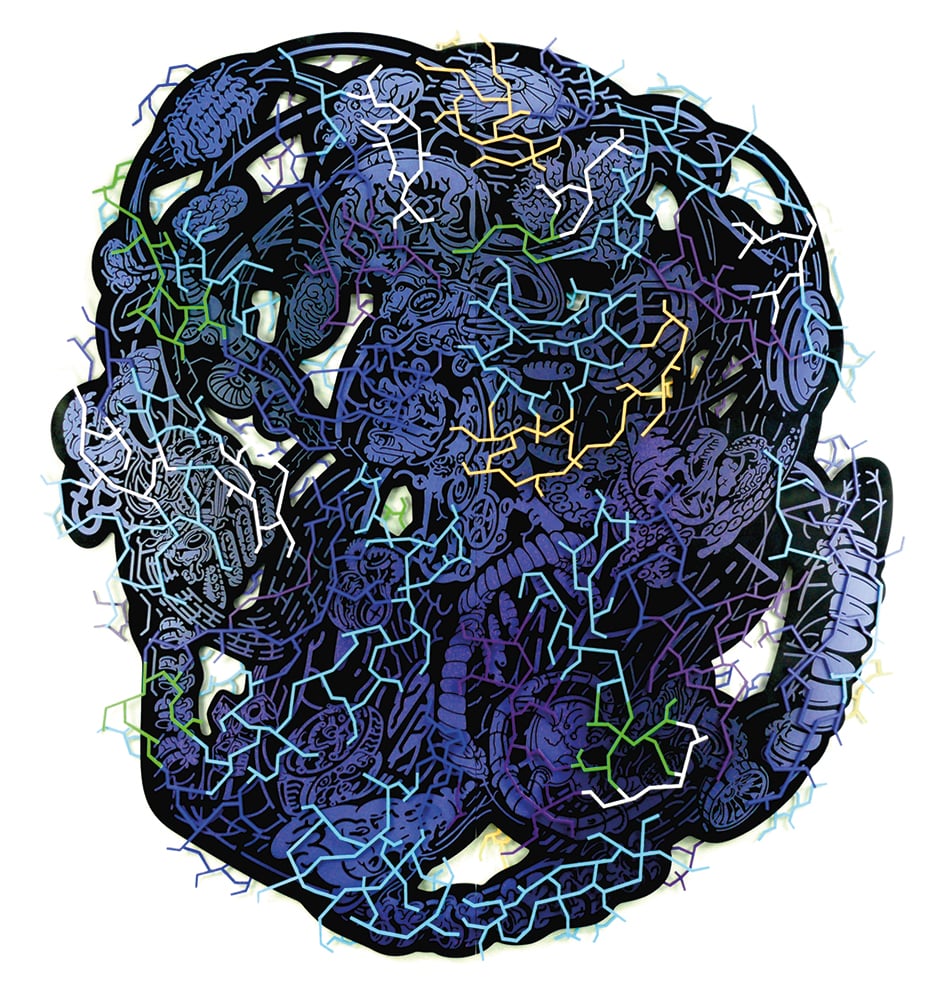
Thinktank XIX, 2021 | acrylic on MDF, 208 x 192 x 3.3 cm
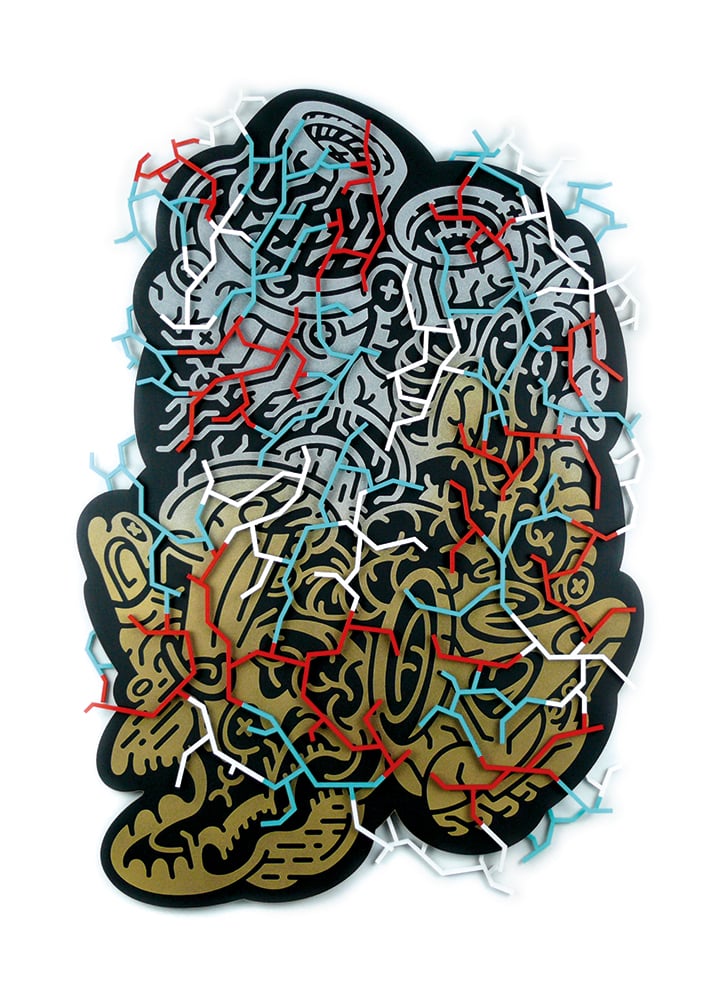
Thinktank XVIII, 2021 | acrylic on MDF, 97 x 66 x 2.8 cm
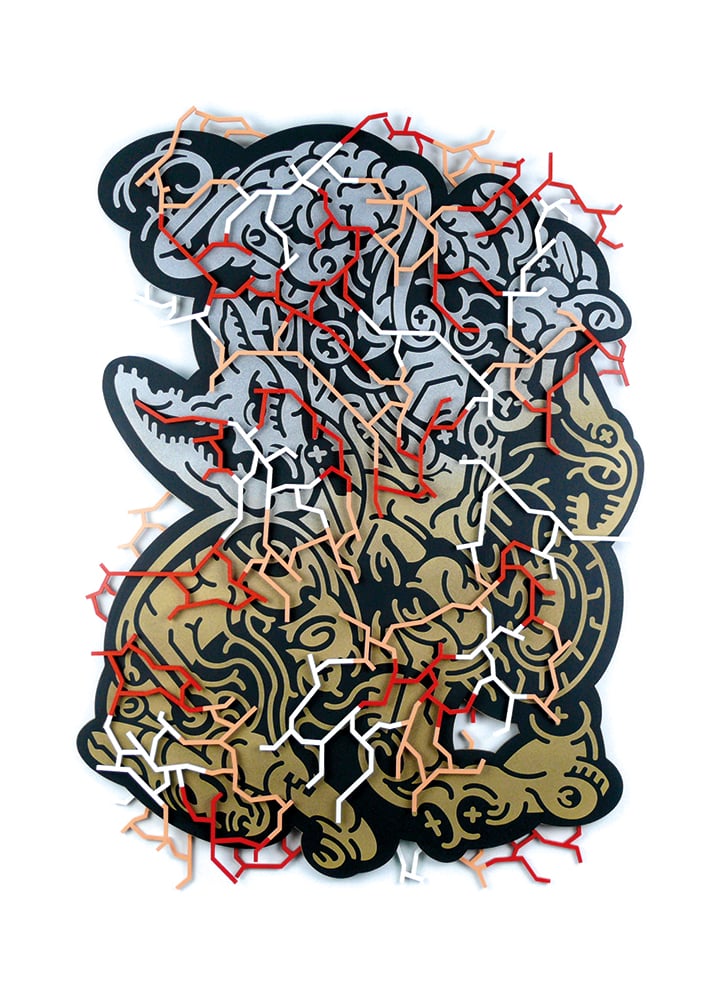
Thinktank XVII, 2021 | acrylic on MDF, 95 x 66 x 2.8 cm
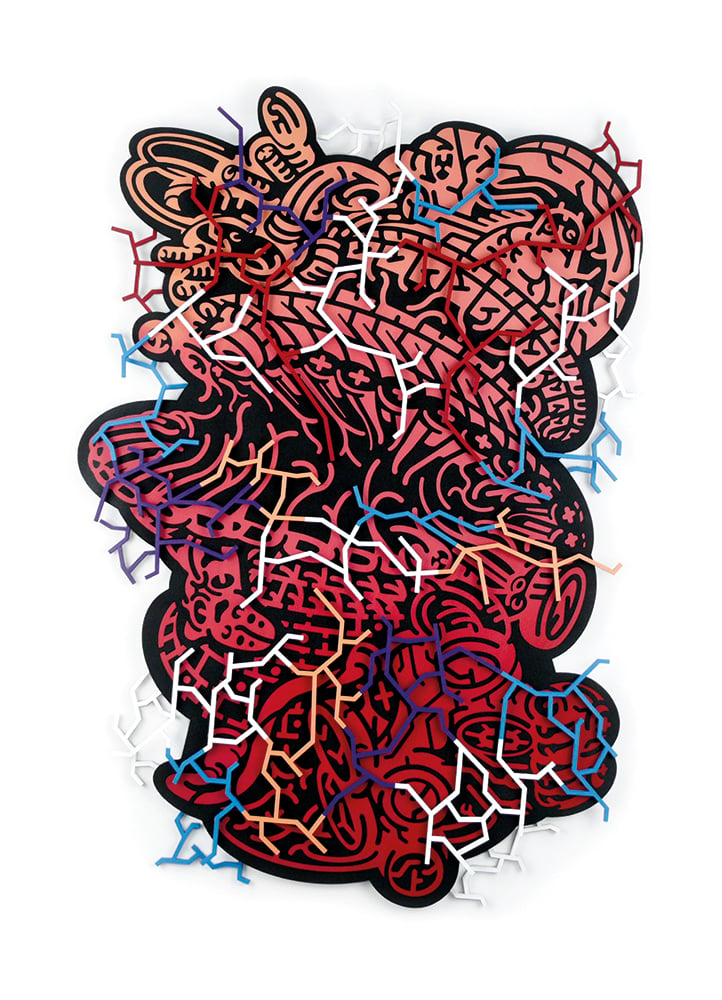
Thinktank XVI, 2021 | acrylic on MDF, 98 x 66 x 2.8 cm

Thinktank XV, 2021 | acrylic on MDF, 96 x 65 x 2.8 cm
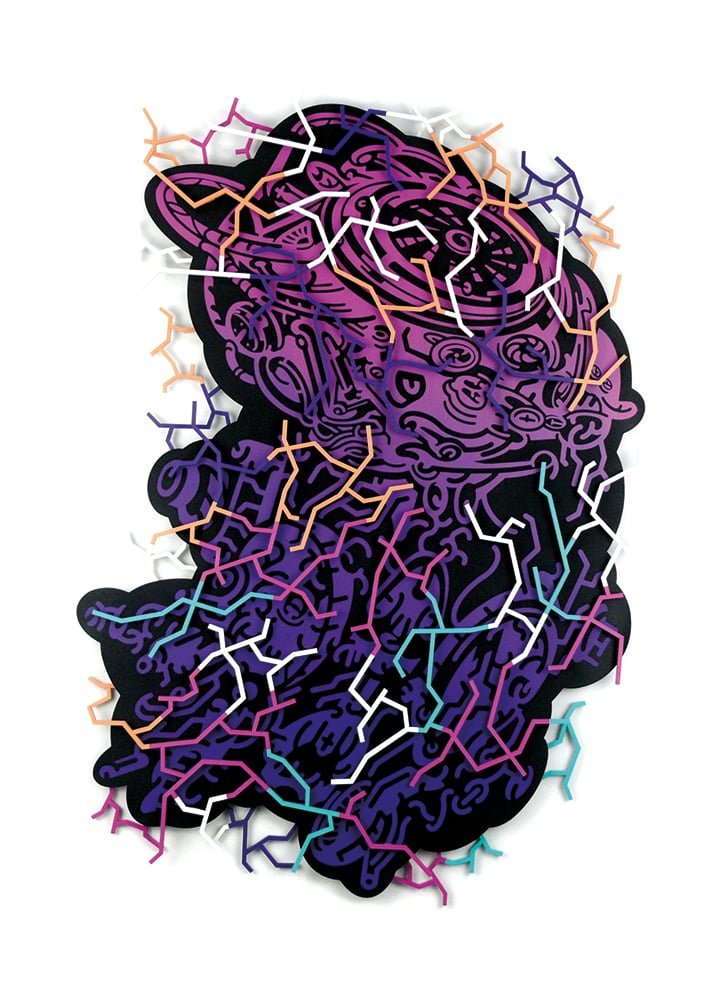
Thinktank XIV, 2021 | acrylic on MDF, 99 x 67 x 2.8 cm

Thinktank XIII, 2021 | acrylic on MDF, 95 x 65 x 2.8 cm

Thinktank XII, 2021 | acrylic on MDF, 78 x 57 x 2.8 cm
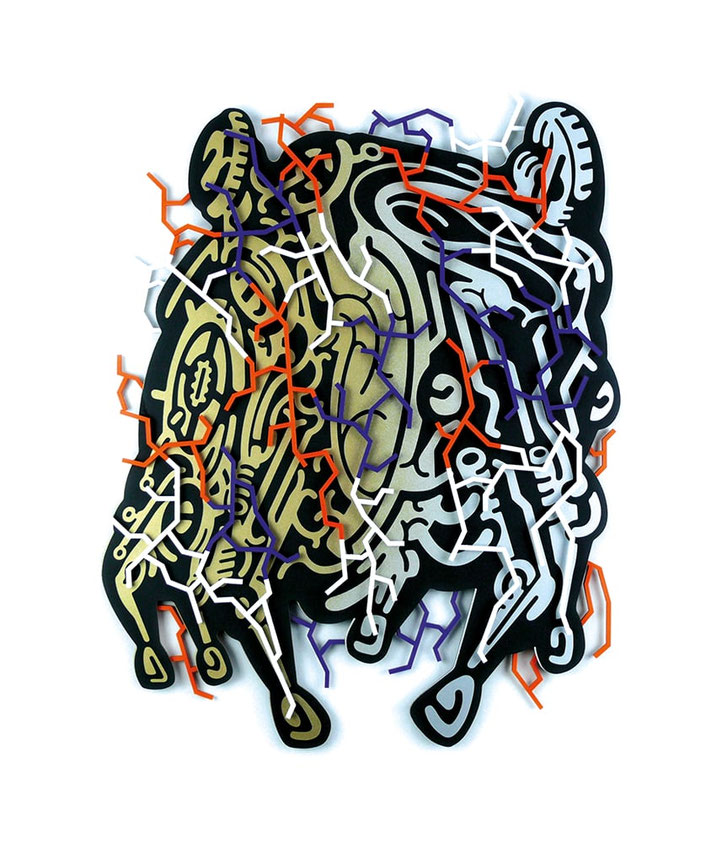
Thinktank XI, 2021 | acrylic on MDF, 73 x 57 x 2.8 cm

Thinktank X, 2021 | acrylic on MDF, 58 x 70 x 2.8 cm
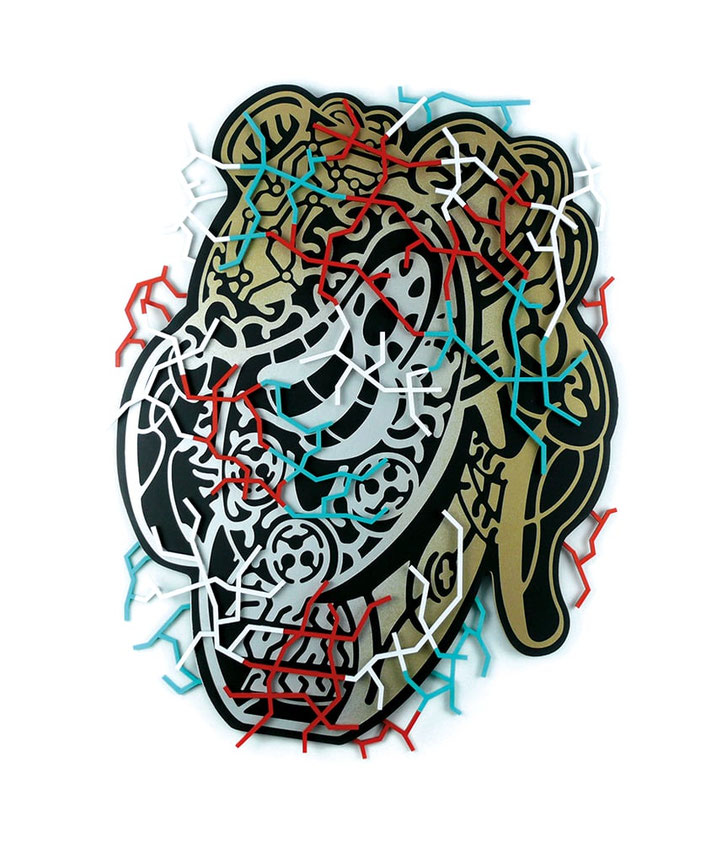
Thinktank IX, 2021 | acrylic on MDF, 75 x 56 x 2.8 cm
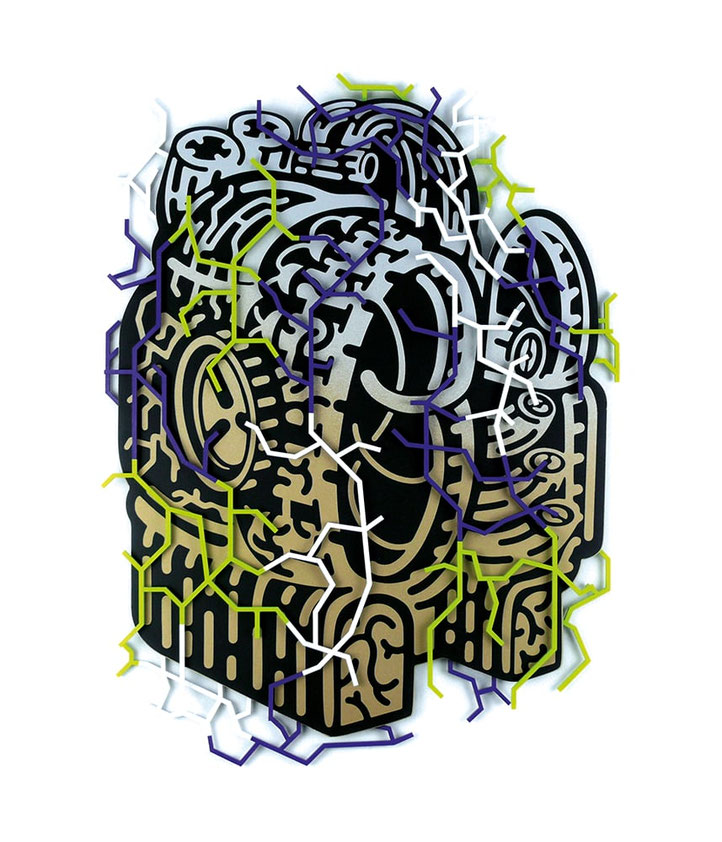
Thinktank VIII, 2021 | acrylic on MDF, 77 x 57 x 2.8 cm

Thinktank VII, 2021 | acrylic on MDF, 77 x 55 x 2.8 cm
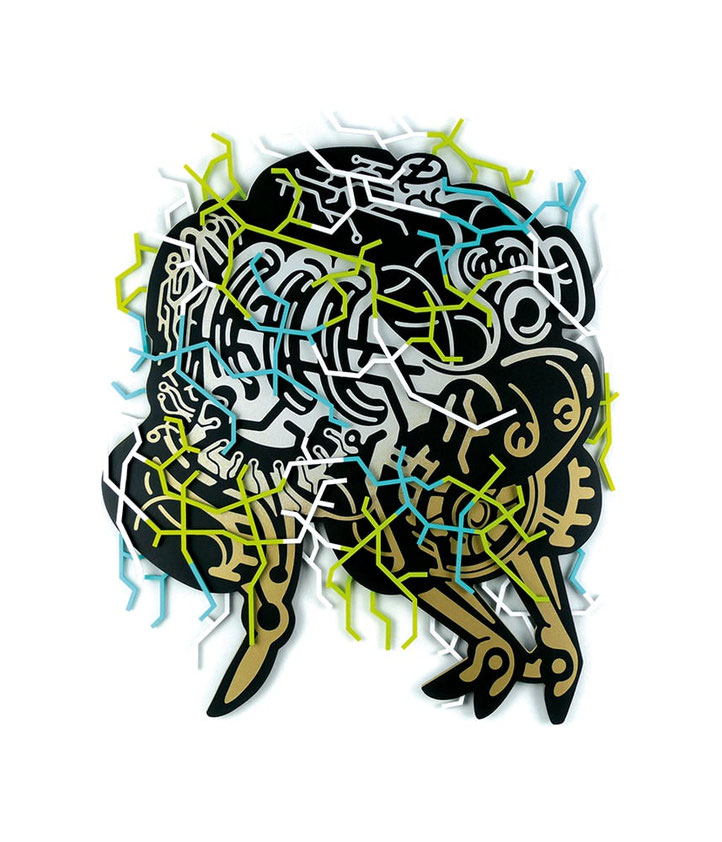
Thinktank VI, 2021 | acrylic on MDF, 69 x 53 x 2.8 cm
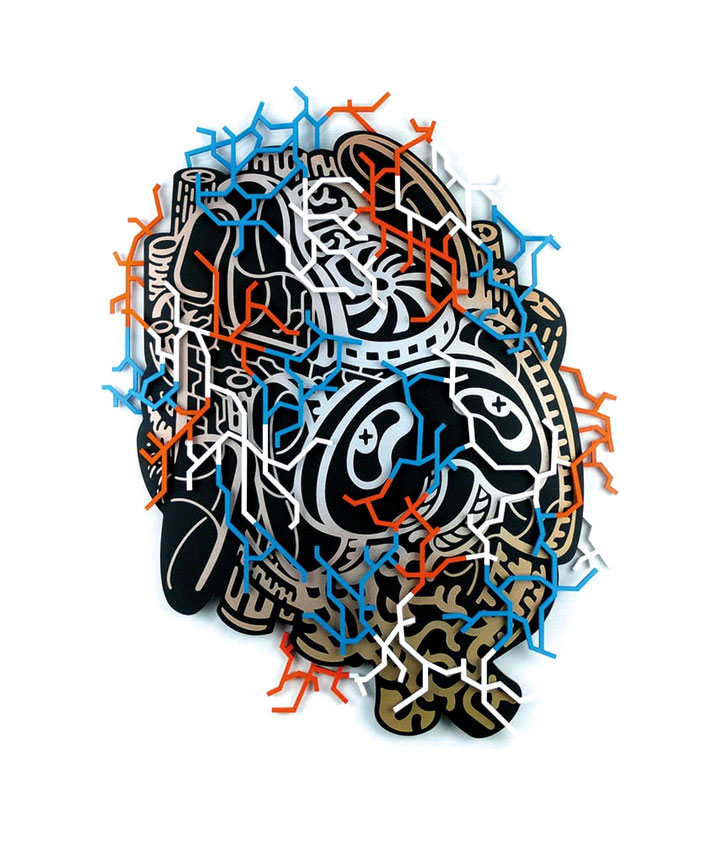
Thinktank V, 2020 | acrylic on MDF, 72 x 58 x 2.8 cm

Thinktank IV, 2020 | acrylic on MDF, 75 x 55 x 2.8 cm

Thinktank III, 2020 | acrylic on MDF, 67 x 54 x 2.8 cm
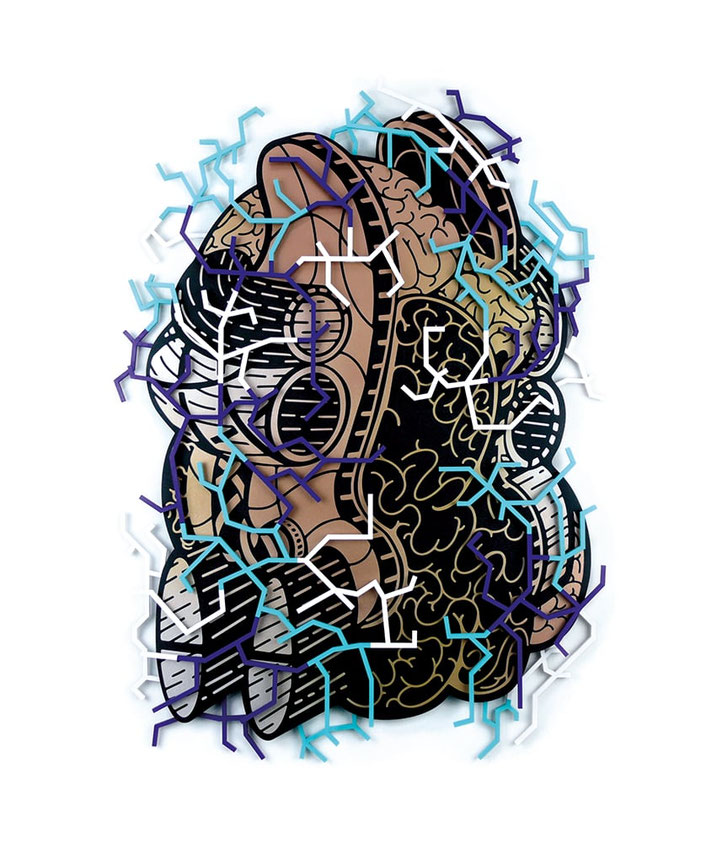
Thinktank II, 2020 | acrylic on MDF, 76 x 54 x 2.8 cm
